



Little Rock, Arkansas- June 2026 Community Quality Alliance (CQA), one of Arkansas’ leading Clinically Integrated Networks (CINs), continues to strengthen care coordination and population health initiatives through its partnership with the Arkansas State Health Alliance for Records Exchange (SHARE HIE).
Representing more than 500 providers across 130 clinics and over 32 different electronic medical record systems, CQA works to improve quality outcomes, enhance care coordination, and support value-based care delivery throughout Arkansas. Through integration with SHARE HIE, CQA providers have access to timely, statewide clinical information that helps improve patient care across multiple healthcare settings.
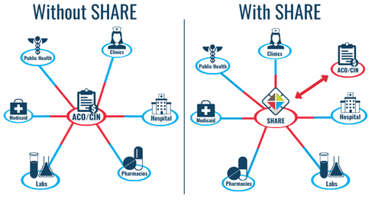 Using SHARE HIE’s interoperability network, CQA participating organizations receive real-time Admission, Discharge, and Transfer (ADT) alerts when attributed patients are seen in emergency departments, admitted to hospitals, or discharged from facilities across Arkansas within their analytical platform. These notifications allow care managers and providers to quickly intervene, coordinate follow-up care, reduce avoidable readmissions, and improve patient engagement after hospitalization.
Through SHARE HIE, Clinically Integrated Network (CIN) participants integrate a single connection from their electronic medical record (EMR) system into SHARE’s statewide interoperability network, allowing clinical data to be securely shared across participating providers, hospitals, specialists, payers, and care management organizations. Rather than building and maintaining numerous costly point-to-point interfaces with individual organizations, CIN participants can leverage SHARE as a centralized interoperability hub. SHARE then delivers real-time Admission, Discharge, and Transfer (ADT) alerts and Continuity of Care Documents (CCDs) on attributed CIN patient populations to CQA CIN, helping providers improve care coordination, support value-based care initiatives, and enhance transitions of care. This model significantly reduces interface complexity and maintenance costs while improving statewide data exchange, clinical visibility, and interoperability across diverse EMR platforms and healthcare organizations.
“Partnering with SHARE HIE has allowed CQA to scale interoperability across our Clinically Integrated Network in a way that would not be feasible through individual interfaces alone. By leveraging a single connection to SHARE, our participating providers can securely exchange critical patient information, receive real-time ADT alerts and CCDs, and improve care coordination across Arkansas. This approach not only reduces the cost and complexity of maintaining multiple interfaces, but also strengthens our ability to support value-based care initiatives and improve outcomes for the patients we serve.” — Britni Hoyt, Director of Population Health, Community Quality Alliance (CQA)
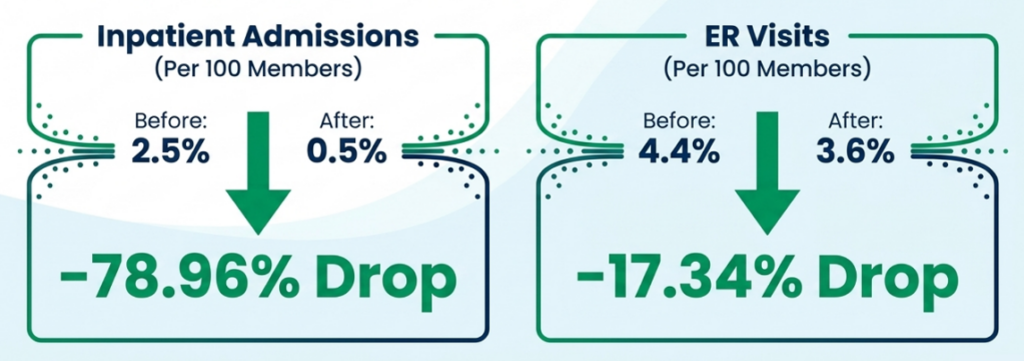
Scale of Impact through Transitions of Care Management (TCMs):
In addition to real-time alerts, SHARE HIE provides CQA CIN providers with secure access to the Virtual Health Record (VHR), allowing clinicians to view a longitudinal patient record that includes hospital encounters, laboratory results, radiology reports, discharge summaries, progress notes, and other critical clinical data contributed from healthcare organizations statewide.
The partnership between CQA and SHARE HIE supports improved collaboration between primary care providers, specialists, hospitals, behavioral health organizations, and care management teams. Access to connected health information helps providers identify care gaps sooner, improve chronic disease management efforts, support preventative care initiatives, and better manage high-risk patient populations.
“CQA’s partnership with SHARE HIE has created tremendous value for our participating providers and the patients they serve across Arkansas. By leveraging SHARE’s statewide interoperability network, our CIN participants are able to securely exchange clinical information, receive real-time ADT alerts and CCDs, and improve care coordination without the expense and complexity of maintaining numerous individual interfaces. This collaboration allows us to scale interoperability more efficiently, strengthen value-based care efforts, and provide clinicians with timely data that supports better patient outcomes.” — Turner Willis, Executive Director, Community Quality Alliance (CQA)
By combining clinical integration with statewide interoperability, CQA and SHARE HIE are helping advance coordinated, patient-centered healthcare across Northwest Arkansas and the River Valley. Together, the organizations continue to demonstrate how connected data and collaborative care models can improve outcomes, support providers, and enhance overall healthcare experience for patients in Arkansas.
 About Community Quality Alliance
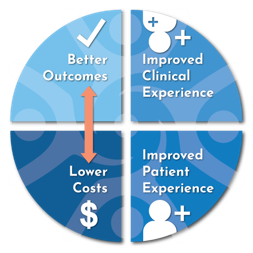
To assure that patients in Northwest Arkansas and the River Valley receive the highest quality care, Community Quality Alliance has partnered with independent and employed physicians from across the region to develop a clinically integrated network (CIN). A CIN is a coalition of healthcare providers who work together in an aligned delivery network to improve the quality of care provided and improve the health outcomes of our community while controlling the total cost of care. The Community Quality Alliance is governed by employed and community physicians working collaboratively to assure patients receive the highest quality and safest care.
Through Community Quality Alliance participants are moving towards a more collaborative way of providing care, working with patients, providers, and payers to build a care system that coordinates the patient’s care across the community. Under value-based care models, providers are rewarded for helping patients accomplish three primary objectives: improve their health, reduce the effects and incidence of chronic disease and controlling the total cost of care where possible. It refocuses on the way providers are paid for care since pay is based in part on whether the highest quality care is provided in the most appropriate setting at the right time.
Learn More: CQA Resource Site